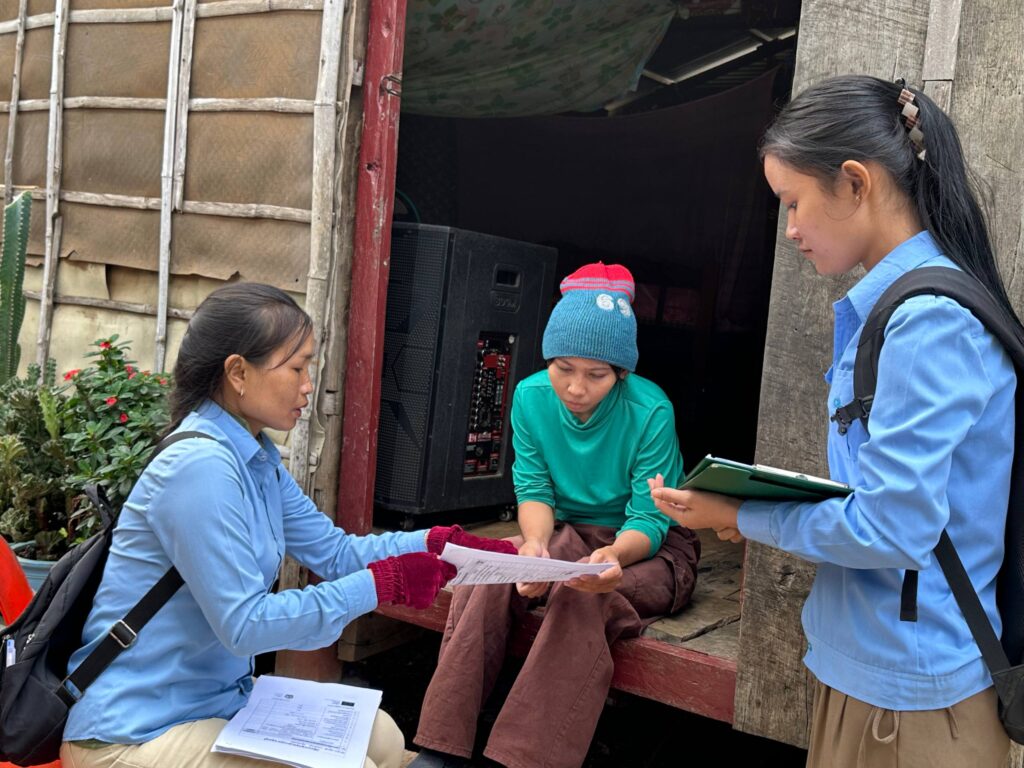

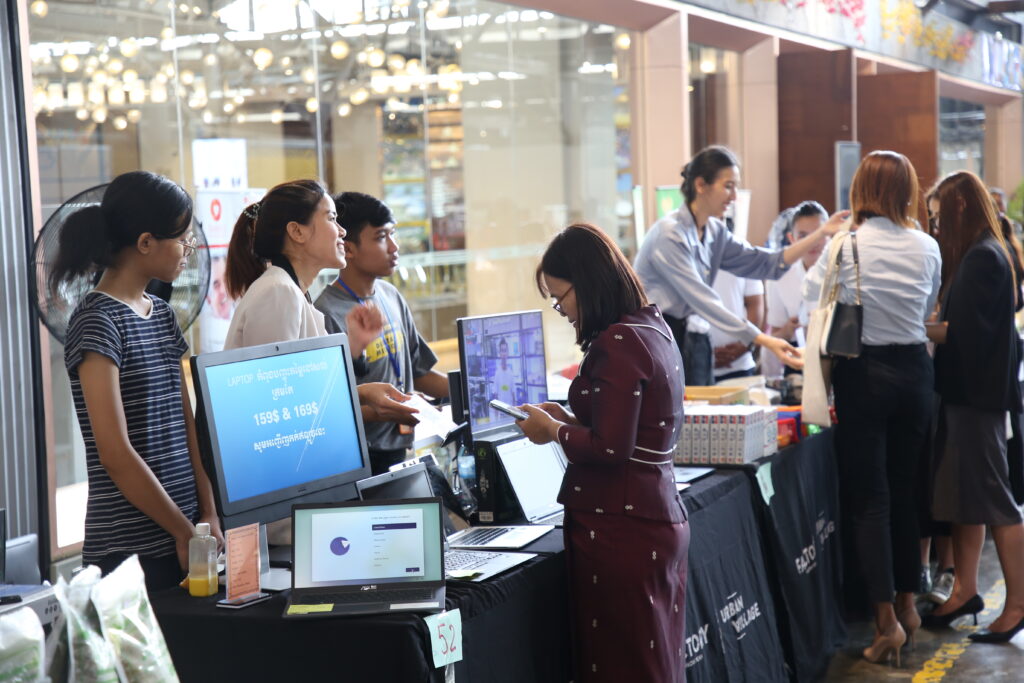
Over the past four years, API has partnered with PACT Cambodia to implement the USAID-funded five-year Women Entrepreneurs Act (WE Act) project in Phnom Penh, Siem Reap, Battambang, and Sihanoukville. The WE Act aims to enhance government accountability in addressing the socio-economic rights of women micro and small entrepreneurs. Collaborating with the Independent Democracy of Informal Economy Association (IDEA) and the Coalition for Partnership in Democratic Development, API engages with 120 women micro and small entrepreneurs and youth leaders, along with their business associations and networks. API provides capacity-building in lobbying and networking skills and facilitates policy dialogue platforms, enabling them to voice their challenges, concerns, and needs to decision-makers and relevant government institutions to seek responsive policies and programs. API has also educated and mobilized 800 IDEA members on the National Social Security Fund. API supports women entrepreneurs in strengthening connections with business associations and networks to boost their visibility, confidence, and access to a supportive community offering advice, resources, and mentorship. Additionally, API facilitates evidence-based policy consultations by conducting research, studies, and policy analysis on prioritized issues and help them engage with Khan/Krong administrations and national government ministries to advocate for solutions to key social and economic challenges they face.
Our Impact on Economic Development & Informal Economy
Our Identified Problems
Cambodia’s economy grew at an average rate of 7% annually from 2010 to 2019, ranking it among the world’s fastest-growing economies. Although the COVID-19 pandemic caused a 3.1% contraction in GDP in 2020, the economy rebounded to 3% growth in 2021. The World Bank and Asian Development Bank projected GDP growth between 5% and 6% for 2023–2025. However, the 2025-armed conflict between Cambodian and Thai forces has caused a collapse in border trade, severely affecting local economies and national revenues. Tourism and migration of about 2 million Cambodian workers to Thailand have been disrupted since June 2025 due to military activity and border closures. Approximately 1 million Cambodian workers returned home jobless, resulting in significant income disruption. Additionally, the 19% U.S. tariff imposed from late 2025 threatens Cambodia’s exports, potentially leading to factory closures and increased unemployment risks.
Social protection support is provided through two main mechanisms: (1) social insurance, such as the National Social Security Fund (NSSF), which offers benefits to formal sector workers for old age, disability, work injury, sickness, maternity, and fatality; and (2) social security programs including the IDPoor/Equity Card (issued by provincial planning departments) and the Health Equity Fund (administered by the Ministry of Health). While the NSSF currently covers formal workers, pilot initiatives for informal workers began in 2022 and expanded in 2025. There remains a critical need to broaden coverage to encompass all workers, including street vendors, self-employed individuals, farmers, and informal business owners.
Accordingly, API’s new Strategic Plan Priority on Economic Development and the Informal Economy is designed to address the needs of informal economy workers and entrepreneurs. This strategy aligns with the Government’s Pentagonal Strategy and National Policy Priorities. The Government has taken progressive steps to tackle informality through national frameworks such as the National Social Protection Policy Framework (2024–2035) and the National Informal Economy Strategy (2023–2028).
API has identified and prioritized key issues for its new strategic plan addressing both urban poor communities in cities and rural areas. Women and youth-led entrepreneurs and self-employed workers in the informal economy face limited representation in policy environments and lack access to business ecosystems, entrepreneurship and employability skills, and job opportunities. Additionally, they experience challenges in accessing startup capital, often carry debt, and have low financial literacy and business management skills.
Women entrepreneurs, in particular, lack business leadership: less than 2% of women-owned businesses are formally registered with the government, and 99% of Cambodian MSMEs have fewer than 10 employees. While women constitute a large share of entrepreneurs, fewer businesses are women-led as they become more formal and larger in scale.
Farmers struggle with limited agricultural skills suited to climate change, inadequate access to agricultural inputs, and weak market linkages. Smallholder farmers are highly vulnerable to climate-related impacts such as droughts, floods, and changing growing seasons, and many lack access to current agricultural knowledge and technologies.
Agricultural cooperatives (ACs) play a vital role in promoting sustainable farming and improving market access. Yet, many ACs face challenges including weak governance, poor financial management, and limited access to green financing and climate-smart technologies.
Systemic barriers hinder women’s economic participation, requiring advocacy for more responsive and inclusive government support services, mechanisms, and policies—especially regarding access to social protection.
Furthermore, limited access to reliable business information, complex and unclear administrative procedures at One Window Service Offices, inconsistent service delivery, restrictive financial requirements such as collateral for loans, and high-interest rates reflect challenges identified in national and regional assessments.
Our Strategy
API’s aims are to:
- Strengthen the capacity and amplify the voices of women- and youth-led micro, small, and medium-sized enterprises and self-employed workers in the informal economy, enhancing their employability and business skills through inclusive business policies and a supportive ecosystem.
- Enhance supporting systems, partnerships, and enabling environments to improve smallholder farmers’ agricultural productivity, market participation, technical skills, access to quality inputs, and market linkages.
These goals will be achieved by:
- Strengthening the enabling environment for inclusive economic empowerment through collaborative efforts that advance policies, institutional frameworks, and coordination supporting women entrepreneurs and youth in accessing entrepreneurship skills, financial services, and market opportunities.
- Facilitating inclusive dialogue and evidence-based advocacy with government authorities, private sector, and NGOs to develop responsive, gender-sensitive, and youth-inclusive systems that ensure equitable access to economic resources and opportunities.
- Conducting policy analysis and structured dialogues that elevate the voices of informal business owners—especially women and youth—among government, civil society, and private sector associations like EuroCham and AmCham on local economic development, informal economy laws, policies, and programs.
- Increasing awareness among women entrepreneurs and youth regarding their business rights, legal obligations, tax responsibilities, and formal registration processes.
- Collaborating with government agencies such as One Window Service Offices (OWSOs), legal aid providers, and civil society to conduct outreach and capacity building that demystify regulatory processes, reduce administrative barriers, and promote equitable access to formalization services and protections.
- Facilitating inclusive economic ecosystems by supporting women entrepreneurs and youth in connecting with business associations, cooperatives, and peer learning networks.
- Promoting institutional linkages and multi-stakeholder coordination to strengthen platforms for shared learning, mentorship, and collective advocacy, thereby improving access to market information, business development services, and collaborative opportunities that foster resilience, innovation, and inclusive growth.
- Encouraging meaningful participation of women entrepreneurs and youth in local economic planning and inclusive policymaking through existing government-led mechanisms.
- Partnering with organizations specializing in agricultural extension, climate-smart practices, and financial literacy to strengthen enabling policies, institutional coordination, and inclusive systems supporting smallholder farmers—particularly women—with climate-smart agriculture training, financial literacy, and market access. API will facilitate multi-stakeholder collaboration, policy dialogue, and capacity development to ensure service providers and local authorities address smallholder farmers’ needs in line with climate-smart and sustainable practices.
- Facilitating inclusive learning platforms and awareness campaigns while engaging farmers in participatory processes with local governments to ensure their voices inform climate adaptation strategies, agricultural extension services, and sustainable land use and resource management decisions.
- Strengthening Agricultural Cooperatives’ (ACs) institutional capacity to help members access green finance for sustainable agriculture and connect to inclusive markets. API will collaborate with financial institutions, government agencies, and civil society partners to improve AC governance, financial literacy, and business planning, while advocating for policies and mechanisms that support climate-resilient investments, market linkages, and participation in local economic planning and inclusive policy development through government-led mechanisms.
GEDSI & Cross-cutting Themes and Approaches:
- API will advocate for the implementation and enforcement of economic and workers’ rights for all citizens. Emphasis will be placed on monitoring compliance by private companies, state-owned enterprises, and individual business owners to ensure equal rights for all workers, without discrimination based on gender, age, ethnicity, or location.
- All informal sector workers must be fully recognized for their economic contributions without penalties and have access to maximum social protection benefits. Supporting their transition to formal status and providing training and resources to establish MSMEs will be a core focus for API.
- Special attention will be given to women, who constitute a significant portion of the informal sector, by providing targeted support and “positive discrimination” measures. Projects will prioritize workers in disadvantaged urban areas and isolated rural communities.
- In rural settings, API will advocate for local governments to link environmental justice and climate resilience efforts with informal and agricultural sector workers’ economic needs, promoting active involvement of women—who are most affected by climate emergencies—and youth—who are deeply concerned about their local environment’s future—in local businesses.
- API will train or retrain staff and volunteers, particularly program and project designers at headquarters and field staff, in Do No Harm principles and practices to ensure projects are designed and implemented responsibly and ethically.