Our Impact on Climate Action and Environmental Justice

For over 20 years, API has led the annual National Advocacy Conference on Natural Resource Governance in Cambodia. From 2004 to 2013, API organized the conference independently, and since 2014, it has been co-hosted with 30 natural resource management NGOs and facilitated by the NGO Forum.


At the local level, API has empowered and built the capacity of 170 community-based organizations (CBOs)—many focused on NRM as well as representing people with disabilities, youth, women, and indigenous peoples—to actively participate in commune-level decision-making processes, with this support continuing beyond project completion. API has also advocated for increased sub-national budgets dedicated to natural resources, environment, and climate change.


To enhance transparency and citizen oversight of public finance, including environmental budgets, API developed a Citizen Budget App that collects budget data from 300 communes and 50 districts across 9 provinces and municipalities. As a result, CBOs in 50 districts have grown more confident in raising community issues with local authorities. This advocacy work has addressed over 300 cases related to natural resource management—covering thousands of hectares of community forests and land—benefiting approximately 400,000 CBO members, many of whom are from indigenous communities.


Additionally, more than 4,000 youth across 20 high schools and universities have actively integrated the Environmental Education Program and its modules into their teaching, adopting interactive, context-based approaches to tackle climate and environmental challenges. Supported by EU funding (2023-2026), this initiative aims to expand to 100 schools nationwide.


Through projects funded by the EU, USAID, and Oxfam (2016–2024), API has raised public awareness of environmental health and accountability in 200 health centers and educated around 400,000 people in nearly 400 communes about health center services and budgets. The program mobilized 20,000 people to provide feedback on health services, including critical issues such as waste management in health centers, leading to measurable improvements in delivery service.
Our Identified Problems

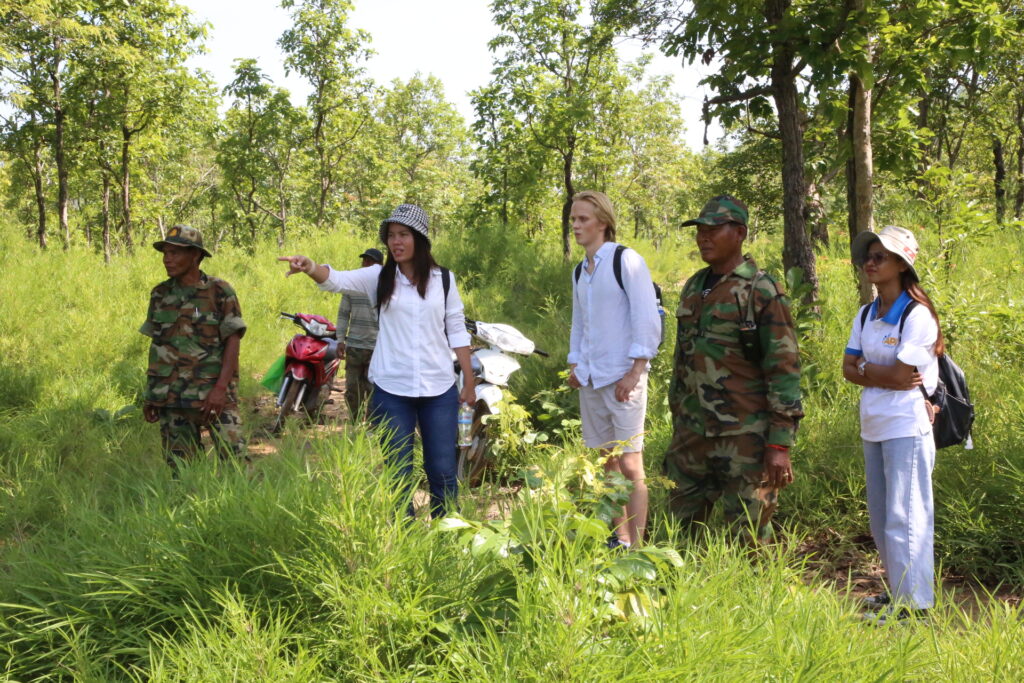
Significant challenges persist in the governance of Cambodia’s natural resource management, especially concerning deforestation, climate change, and the management of marine and water resources. From 2001 to 2022, Cambodia lost 923,000 hectares of tree cover in protected areas—equivalent to 17% of the country’s tree cover as of 2000—with 215,000 hectares (23% of this loss) occurring between 2020 and 2022, according to Global Forest Watch (2019). The primary driver of this deforestation has been rubber production within Economic Land Concessions (ELCs), with about 699,000 hectares, or 3.9% of Cambodia’s total land, designated for rubber plantations. This deforestation has critically harmed rural livelihoods, especially among ethnic minority communities, and led to environmental consequences such as soil erosion, flooding, biodiversity loss, and decreased carbon storage capacity, thereby worsening climate change.


The Global Climate Risk Index 2020 ranks Cambodia as the 12th most vulnerable country to climate change worldwide. Cambodia’s economy relies heavily on climate-sensitive sectors such as agriculture, water resources, forestry, fisheries, and tourism. The World Bank and Asian Development Bank (2021) noted that climate impacts are likely to deepen existing wealth and income inequalities, undermining poverty reduction efforts. In 2020, Cambodia ranked 149 out of 182 countries, reflecting weak adaptive capacity, inadequate infrastructure, and limited institutional strength. Climate change contributes to displacement, jeopardizes livelihoods, and increases food insecurity. The combination of weak adaptation ability, insufficient policies, and fragile infrastructure and social protection systems further undermine economic resilience, disproportionately affecting women and marginalized groups.


By the 2040s, around 4 million people in Cambodia could be exposed to severe river flooding. Floods and droughts are projected to cause economic losses equivalent to 10% of Cambodia’s GDP by 2050. To confront these challenges, the Government has adopted the Climate Change Strategic Plan (CCSP 2014–2023) and its successor, the second CCCSP (2024–2033).


The public’s knowledge, practices, and participation related to climate change and environmental issues remain very limited. Farmers and community-based organizations—such as those managing community forestry, fisheries, and protected areas—lack understanding and application of climate change concepts, climate-smart agricultural methods, local fundraising, and sustainable management practices.


The private sector’s discharge of wastewater from factories and enterprises into water bodies, canals, and seas significantly harms the environment, human health, and biodiversity. This problem is worsened by poor legal compliance and weak environmental enforcement within the private sector.


Sub-national budgets rarely allocate funds for incorporating climate adaptation into Commune Development Plans and annual investment programs. Moreover, government capacity to manage waste, including plastic bags, in urban and public spaces is limited.


Weak law enforcement and inadequate political support have led to the degradation and overexploitation of natural resources, disproportionately impacting marginalized groups such as indigenous peoples who are especially vulnerable.

Our Strategy

API’s Strategies are to:


  • Increase citizens’—especially youth—knowledge about the environment and climate change, enhance their capacity to manage climate risks, and support youth-led climate action and advocacy initiatives.
  • Amplify the voices of the most vulnerable groups, including women, people with disabilities, indigenous peoples, and youth from communities, high schools, and universities, on natural resource governance and climate change at regional, national, and sub-national levels.
  • Support medium and large-scale enterprises in meeting environmental compliance and promoting responsible business practices.
  • Strengthen local community resilience to climate change and promote sustainable development.
  • Enhance Sub-National Administrations’ knowledge and capacity to better manage climate risks and lead local climate action and advocacy initiatives.


These goals will be pursued through the following approaches:


  • Raising public awareness of climate change and environmental issues via education and legal frameworks targeted at youth and communities.
  • Empowering local communities to engage with government on climate budgeting processes.
  • Facilitating dialogue between citizens, youth, private businesses, and investment projects to enforce legal measures, educate communities on access to information and participation in environmental and social impact assessments (EIA), encourage broad stakeholder participation, and strengthen oversight.
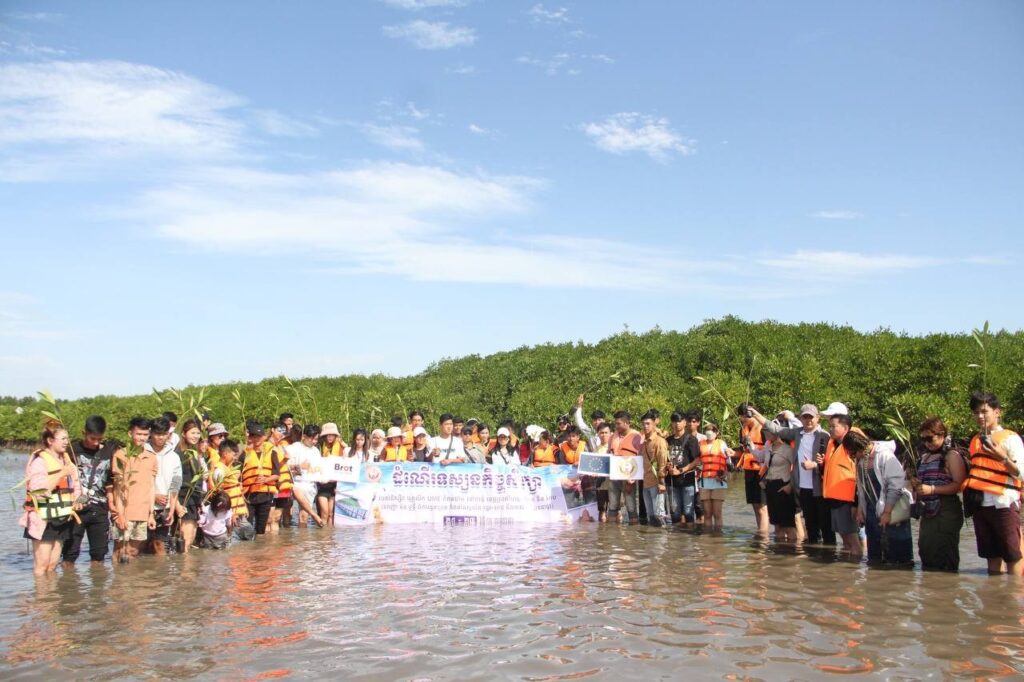
  • Supporting community-based natural resource management—such as protection, conservation, and patrolling—through small advocacy grants, ICT tools, and social media.
  • Including vulnerable groups in initiatives and government decision-making processes addressing Nationally Determined Contributions on climate change through partnerships with NGOs, INGOs, and key stakeholders like the Ministry of Environment, Ministry of Agriculture, Forestry and Fisheries, and National Committee for Disaster Management.
  • Facilitating policy dialogue and providing access to climate change policies (e.g., NDC 3.0, Green Procurement, Environmental Code, Green Business) at sub-national, central, regional, and international levels.
  • Empowering citizens—especially women, youth, and marginalized groups—to raise environmental compliance concerns with government and private sector enterprises.
  • Partnering with local and international businesses, civil society, and government institutions to build capacity and advocate for environmental compliance and responsible business practices in medium and large-scale enterprises.
  • Enhancing the capacity and sustainability of natural resource management CBOs by providing specialized training in governance, financial management, proposal writing, evidence-based advocacy, local fundraising, livelihood, and business skills. This includes training CBOs to use social media effectively for public engagement and local fundraising campaigns featuring storytelling, photos, videos, conservation work, and community activities to reduce donor dependency.
  • Implementing social accountability initiatives focused on environment and climate change.
  • Running green initiatives and climate risk management programs that regularly train SNAs on environmental laws, climate change compliance, and equip them with skills for effective action.
  • Advocating for increased sub-national budget allocations for climate action.
  • Developing climate tracking tools for local authorities to monitor and report climate change issues in their communities.


API’s Strategic Plan Priority on Climate Action & Environmental Justice aligns with the Government’s Pentagonal Strategy, which highlights environmental sustainability as a key pillar. Cambodia’s Climate Change Strategic Plan 2024–2033 (CCCSP) serves as a politically significant ten-year framework that integrates national development goals such as infrastructure improvement, job creation, and social equity. It targets carbon neutrality by 2050, seeks to address gaps in the country’s Nationally Determined Contribution (NDC 3.0), and emphasizes inclusive approaches.