Women entrepreneurs are the backbone of Cambodia’s informal economy, driving innovation, supporting families, and building resilient communities. Yet, they face persistent barriers—limited access to training, finance, social protection, and formal recognition. The Women Entrepreneurs Act Cambodia (WE ACT) initiative, led by the Advocacy and Policy Institute (API) and partners, is working to change this narrative by advocating for inclusive policies, practical support, and capacity building for women in the informal sector.
Key Insights from Recent Research
1. The Landscape: Women in Cambodia’s Informal Economy
- Women dominate the informal sector: Nearly 90% of Cambodia’s workforce is informal, with women—especially street vendors—making up the majority.
- Entrepreneurial spirit: Women street vendors and micro-entrepreneurs play a vital role in local economies, providing essential goods and services.
- Education and skills gap: While many women have basic education, most have not had access to formal business or vocational training, limiting their ability to adapt and grow.
2. Challenges Facing Women Entrepreneurs
- Legal and policy barriers: Most women street vendors lack legal status, making them vulnerable to exploitation, eviction, and exclusion from social benefits.
- Economic vulnerability: Many women entrepreneurs face unstable incomes, high fees, and limited access to finance.
- COVID-19 impact: The pandemic hit women street vendors hardest, reducing income, increasing debt, and exposing gaps in relief and social protection.
- Barriers to formalization: High registration fees, complex bureaucracy, and lack of information deter women from formalizing their businesses.
3. What Works: Policy and Practice Recommendations
- Expand accessible, practical training: Subsidized, flexible vocational programs in business management, digital skills, and financial literacy are essential.
- Simplify business registration: Digital platforms and awareness campaigns can help women understand and access the benefits of formalization.
- Inclusive social protection: Policies must extend health care, social security, and safety nets to informal women workers, learning from ASEAN best practices.
- Microfinance and grants: Affordable loans and grants targeted at women entrepreneurs can unlock small-scale investments and innovation.
- Strengthen collective voice: Supporting organizations like IDEA to increase outreach, unionization, and advocacy empowers women to negotiate better conditions.
- Public-private partnerships: Collaboration among government, NGOs, and the private sector is key to scaling impact and ensuring sustainability.
WE ACT in Action
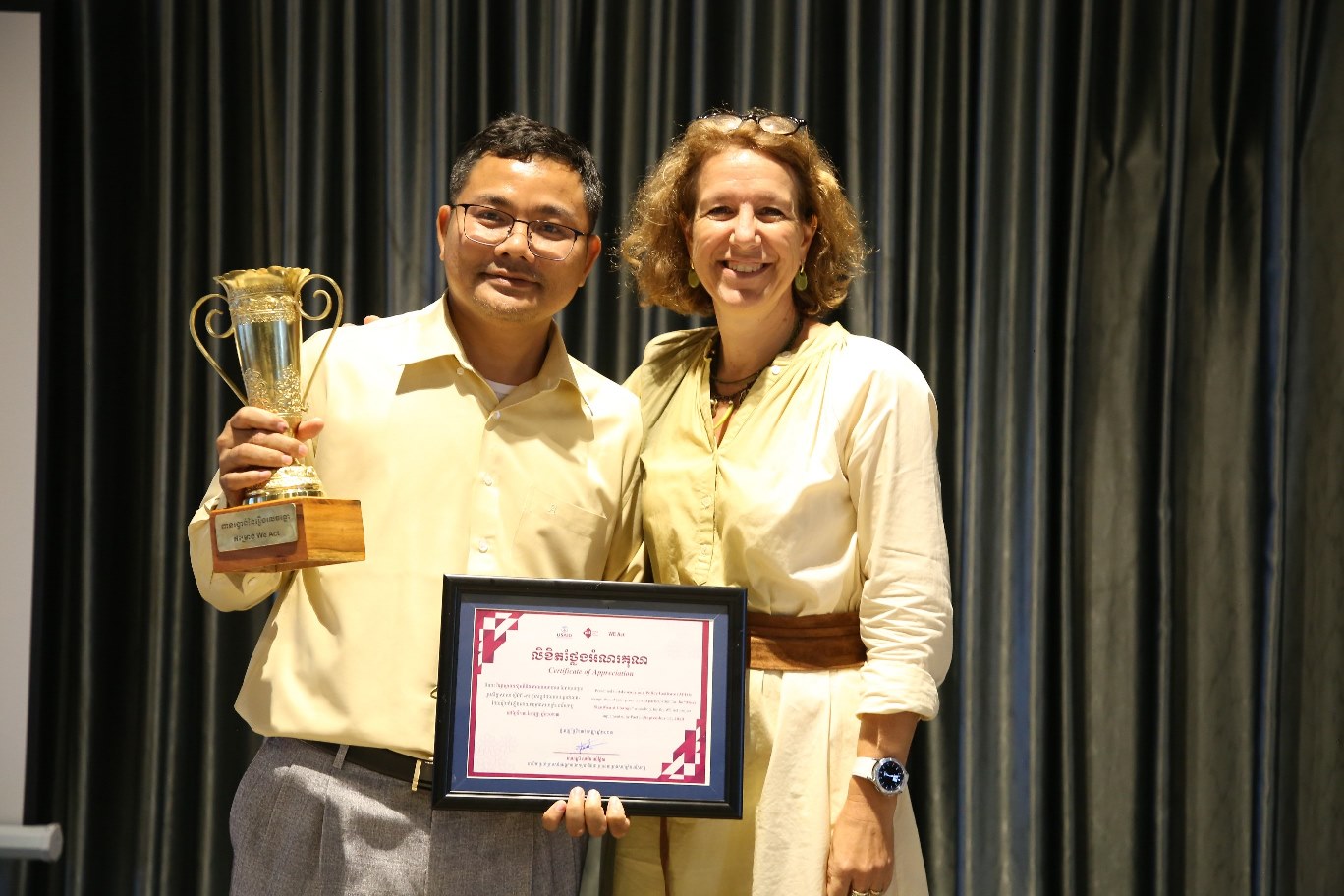
The WE ACT project, funded by USAID and implemented by API, IDEA, and CPDD, targets women-owned micro, small, and medium enterprises in Phnom Penh, Battambang, and Siem Reap. Through research, advocacy, and direct support, WE ACT is:
- Building women’s capacity through tailored training and mentorship.
- Advocating for policy reforms that recognize and protect women in the informal sector.
- Facilitating access to finance, social protection, and business networks.
- Promoting digital literacy and market access for women entrepreneurs.
Download the Research
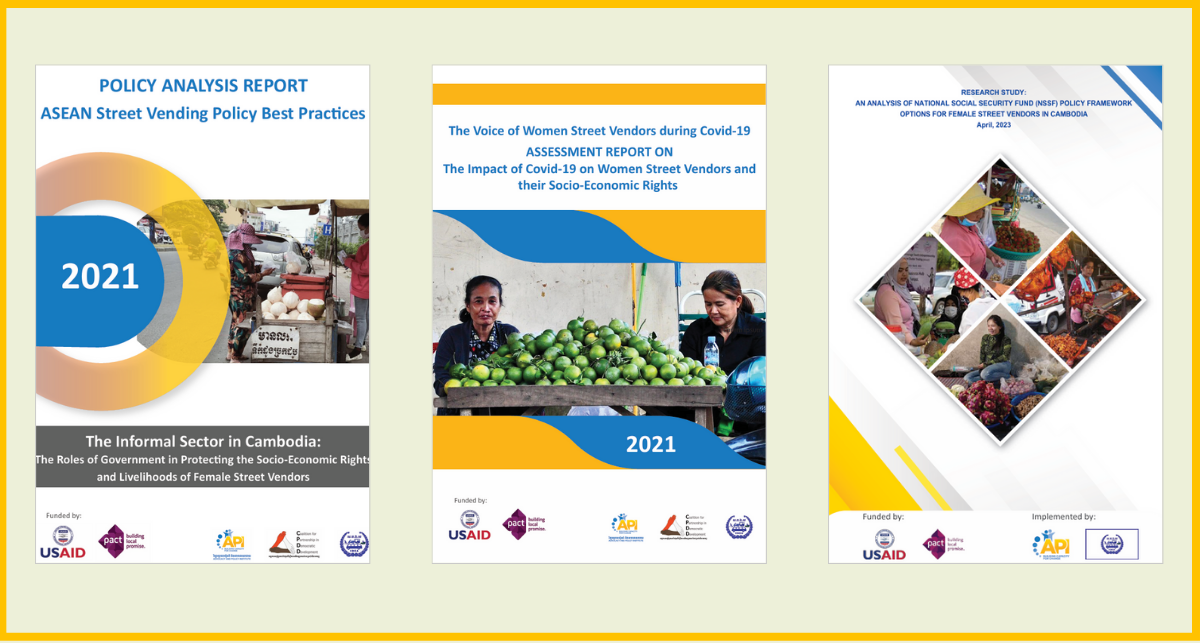
To support evidence-based advocacy and program design, we invite you to download and explore the following key studies: