Donors: GIZ/EU SPACE
Location: Preah Vihar, Banteay Meanchey, Oddar Meanchey, Kampong Thom & Siem Reap
Duration: 1 October 2015-01 April 2016
Budget: 63,497.38 EUR
Implementing Partners: Advocacy and Policy Institute (API), Secretariat for National Committee for Sub-National Democratic Development (NCDD-S), Ministry of Women’s Affairs
Introduction
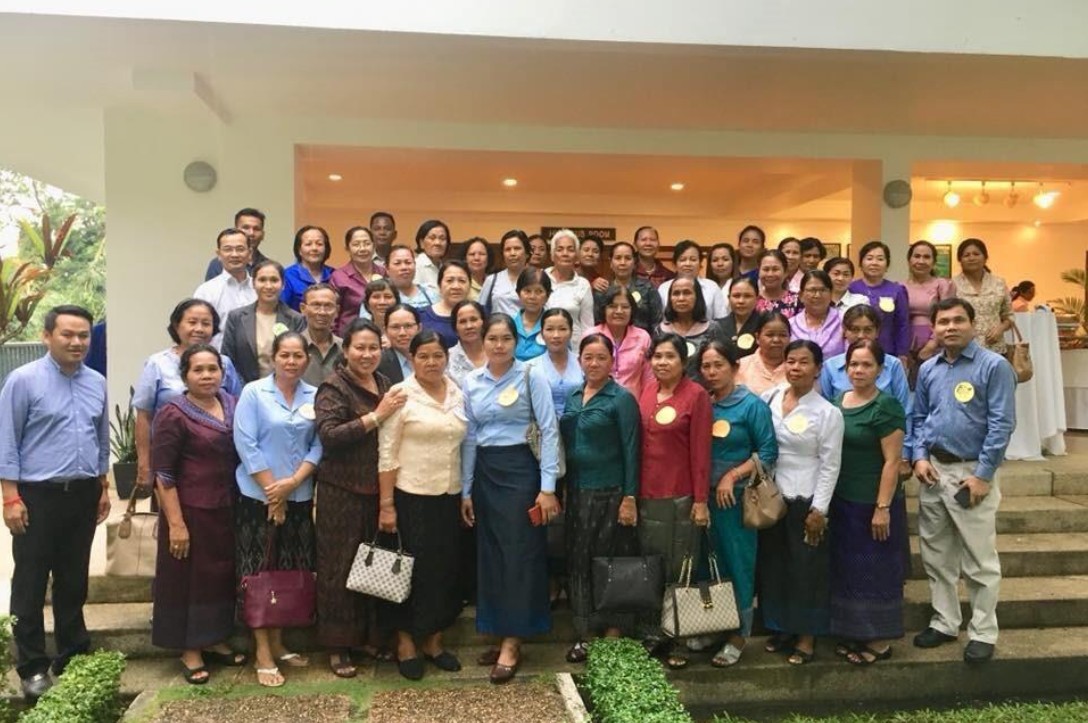
Following the consultative workshops held in November 2015, API organized the first follow-up capacity development workshop focused on advocacy and public speaking skills for female councilors at the provincial, municipal, and district levels. The workshop aimed to build confidence and enhance the ability of female councilors to advocate effectively and speak publicly in council meetings and public events.
A total of 75 out of 88 invited female councilors participated in the training, which was designed to foster experience sharing, improve facilitation skills, and deepen understanding of council roles and responsibilities.
Results
Key Achievements
- Experience Sharing: Participants exchanged insights between newly elected and senior councilors, fostering mutual respect and collaboration.
- Advocacy Skills: Councilors gained a clear understanding of advocacy concepts, steps, and tools such as problem-tree analysis and pros-and-cons exercises.
- Public Speaking: 80% of participants successfully drafted and delivered speeches on topics like women’s rights, domestic violence, and infrastructure.
- Confidence Building: Participants reported increased confidence in public speaking and advocacy, with many expressing readiness to apply these skills in council meetings and community events.
- Networking: A network of female councilors was established across the five provinces to support ongoing collaboration and peer learning.
- Evaluation Results: Knowledge scores improved from 66% (pre-test) to 82% (post-test), with 90% of participants rating the training methodology as “very good.”
Challenges
- Limited general knowledge and education levels among some participants hindered their ability to develop strong speeches and conduct evidence-based advocacy.
- Budget constraints and lack of timely funding for WCCC and CCWC activities.
- Some councilors lacked motivation or understanding of district-level issues, affecting decision-making quality.
Lessons Learned
- Female councilors began advocating for women and children’s issues to be included in council agendas.
- Some councils allocated budgets for orientation sessions on roles and responsibilities.
- Participants emphasized the importance of constructive feedback and peer-to-peer learning.