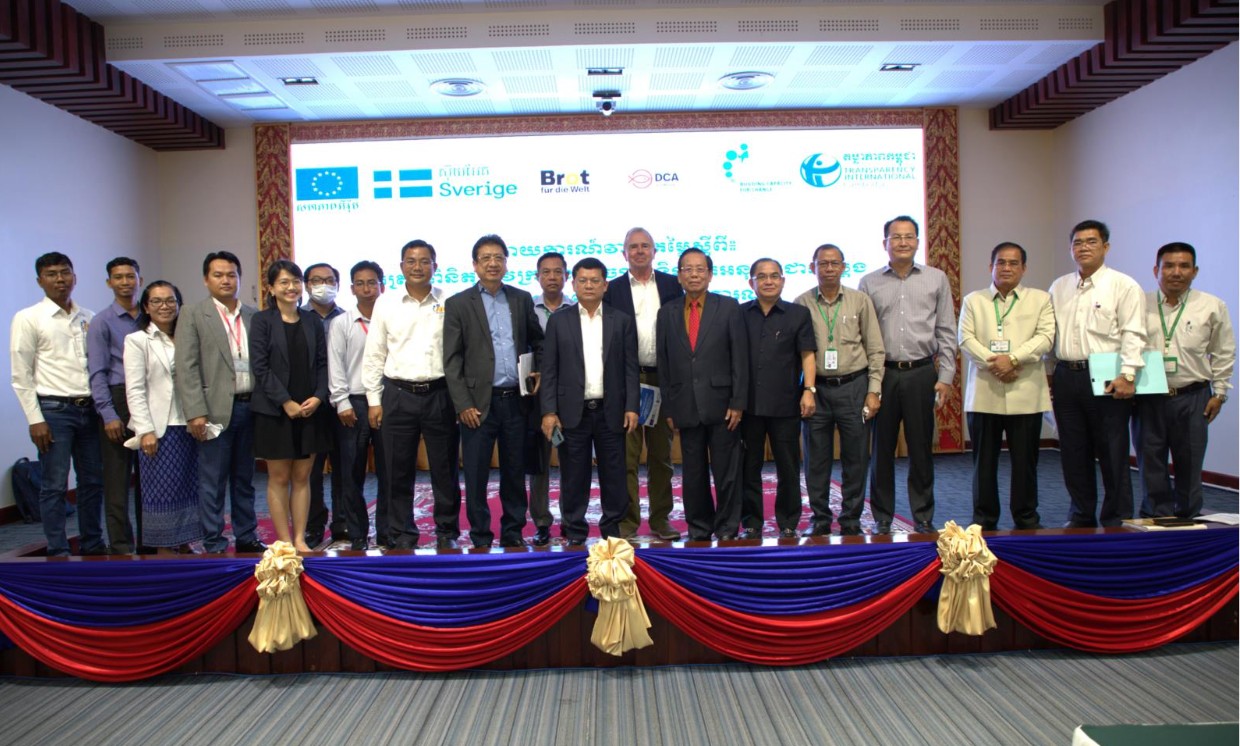
Public procurement is a cornerstone of effective governance and public financial management. In Cambodia, the procurement system has long faced challenges related to transparency, accountability, and citizen participation. Recognizing these gaps, the Advocacy and Policy Institute (API) and Transparency International Cambodia (TI) jointly launched the “Towards Public Procurement Transparency” (PPT) project in 2022 to promote reforms that ensure public resources are managed efficiently and equitably.
The project was initiated in response to the Royal Government of Cambodia’s efforts to revise the 2012 Law on Public Procurement. API and TI contributed to this process by conducting legal analyses of the new draft law and advocating for improvements that align with international standards such as the UNCITRAL Model Law and OECD principles. Through policy dialogue, stakeholder engagement, and evidence-based recommendations, the project aimed to strengthen the legal framework and institutional practices governing public procurement.
By enhancing access to procurement information and promoting inclusive participation, the PPT project supports the broader goal of reducing corruption risks and improving service delivery for citizens. The initiative also underscores the importance of civil society’s role in shaping public policy and holding institutions accountable.
👉 Read related post: Legal Analysis Report on the Draft Law of Public Procurement
The “Towards Public Procurement Transparency” (PPT) project achieved significant progress in strengthening Cambodia’s public procurement system through legal reform, stakeholder engagement, and evidence-based advocacy.
1.Legal Reform and Policy Influence
API and TI conducted a comprehensive legal analysis of the Draft Law on Public Procurement and submitted detailed recommendations to the Ministry of Economy and Finance (MEF), Ministry of Education, Youth and Sport (MoEYS), the Anti-Corruption Unit (ACU), and development partners. As a result:
MEF accepted four key recommendations to improve Articles 11, 46, and 48 of the draft law, including:
2.Legal Assessment and Gap Identification
A legal assessment was conducted to evaluate the alignment of Cambodia’s procurement framework with international standards. The study identified critical gaps in seven key areas:
1.Stakeholder Engagement and Awareness
The project facilitated a national dissemination workshop that brought together government officials, civil society, and development partners to discuss the draft law and share recommendations. This platform helped build consensus on the need for a more transparent and accountable procurement system.