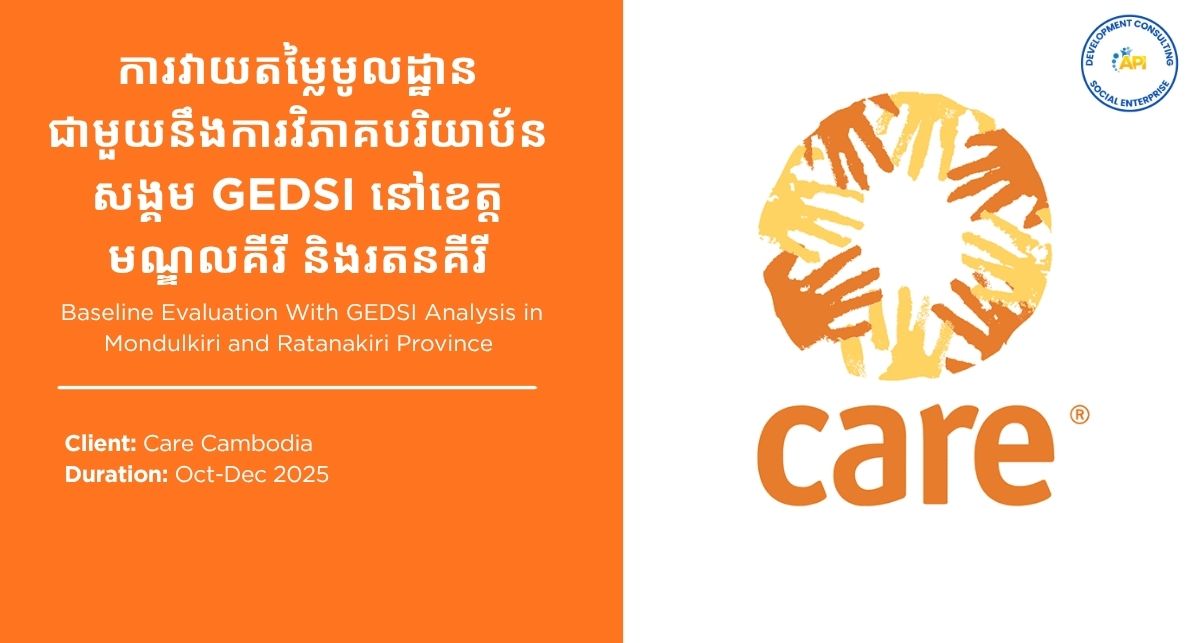
comprehensive Baseline Evaluation combined with a Gender Equality, Disability, and Social Inclusion (GEDSI) Analysis for the Mekong Elevate Project (2025–2029). The project focuses on strengthening the climate resilience of upland ethnic minority (EM) communities in Mondulkiri and Ratanakiri—particularly EM women, youth, and persons with disabilities.
Project Context: Mondulkiri and Ratanakiri are home to diverse ethnic minority groups (Bunong, Jarai, Kreung, Tampuan, Kavet, Prov) who depend heavily on natural resources and face increasing climate risks, such as drought, flooding, fires, and deforestation. Social inequalities—including limited voice for women, exclusion of youth, and stigma against people with disabilities—further reduce community resilience. Mekong Elevate aims to strengthen:
The baseline study had two primary aims:
These insights guide adaptive management and improve project strategies to ensure equitable participation and benefit-sharing among marginalized groups.
The project supports CARE and partners to:
Ultimately, the baseline provides a strong foundation for measuring MekongElevate’s impact and ensuring that no group is left behind in climate resilience efforts.